Featured
Table of Contents
That releases up money in the short term, and you may have 3 to four years to save toward the settlement amount. Very dangerous to credit scores, largely as a result of missed out on payments and a negative "resolved" mark that could remain on your credit score report for approximately 7 yearsMay be just choice if other alternatives (debt consolidation, equilibrium transfer credit history cards, debt mercy) aren't possibleTypically calls for a cost to the third celebration, which can offset some or every one of the financial savings from financial obligation settlementMay assist you prevent personal bankruptcy if you've missed out on numerous paymentsNot all creditors deal with debt settlement business Financial obligation mercy may be best for you if you are experiencing a financial difficulty that makes it nearly difficult to pay for your financial obligation equilibriums.

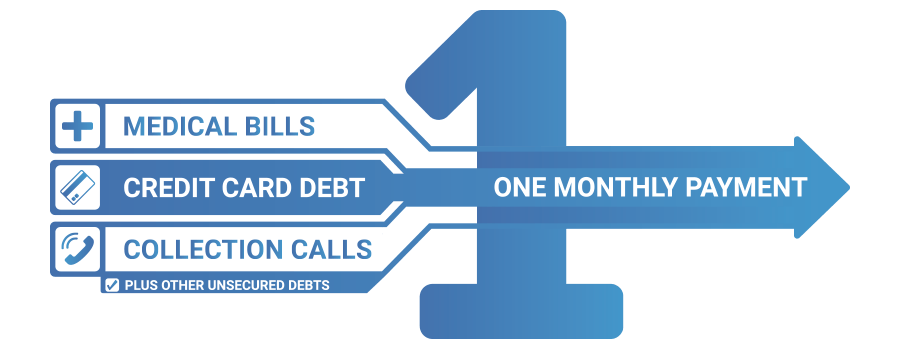
With a DMP, you make one monthly settlement to the credit scores counseling firm. Those funds are after that dispersed to financial institutions of your unprotected financial obligations, such as credit history cards and installment finances. The firm collaborates with your creditors to reduce rate of interest rates or waive charges, yet some creditors might reject such concessions.
A financial debt loan consolidation financing combines your eligible financial obligations right into one brand-new funding. It can assist you pay for financial debt if you have the ability to secure a lending rate that's reduced than the ordinary price of the accounts you're consolidating. Nonetheless, you must avoid racking up financial debt on those newly gotten rid of accounts or your financial debt might grow also higher.
These cards often offer a 0% interest introductory duration of approximately 21 months. That provides you plenty of time to eliminate or dramatically minimize your equilibrium while making interest-free settlements. For some people facing insurmountable financial obligation, personal bankruptcy might be the only means to stop collection procedures and legitimately solve their debts.
How APFSC Differ from the Industry for Beginners
You might require it if your lender or a collection agency ever before attempts to collect on the financial debt in the future. The letter might show you don't owe what the collection firm's documents reveal. Yes, most of the times, the internal revenue service considers forgiven financial obligation as taxed earnings. When a lending institution forgives $600 or more, they are needed to send you Form 1099-C.
Debt forgiveness or negotiation often harms your credit. Anytime you clear up a financial debt for less than you owe, it may look like "worked out" on your credit report and influence your credit report for 7 years from the day of settlement. Your credit rating can also drop significantly in the months causing the forgiveness if you fall back on settlements.
What Does Regulatory Considerations Regarding Bankruptcy Proceedings Mean?
This circumstance commonly results from underreporting income, not submitting returns on time, or disparities found throughout an Internal revenue service audit. The consequences of gathering tax financial debt are major and can consist of tax liens, which offer the Internal revenue service a legal claim to your residential property as safety for the financial debt.
Salaries and Financial institution Accounts IRS can levy (seize) wages and financial institution accounts to satisfy the financial debt. Residential or commercial property Seizure In severe cases, the IRS can seize and offer building to cover the financial obligation.
Anxiety, anxiousness, and various other mental health and wellness problems. Social Preconception Encountering lawful activity from the IRS can bring social stigma. Damage to reputation and partnerships. Employment Opportunities An inadequate credit rating rating due to strain financial obligation can restrict employment possibility. Problem searching for or keeping a job. Federal government Advantages Tax debt might influence eligibility for government advantages, such as Social Safety And Security and Medicaid.
The Of Everything You Should Prepare For Throughout the Bankruptcy Experience
The OIC takes into consideration numerous variables, consisting of the taxpayer's income, costs, asset equity, and capacity to pay. Effectively discussing an OIC can be complex, needing a thorough understanding of the internal revenue service's standards and a solid debate for why your deal straightens with your capacity to pay. It is essential to note that not all applications are accepted, and the procedure requires detailed financial disclosure.
The IRS examines your overall monetary circumstance, including your revenue, expenditures, property equity, and capacity to pay. You need to also be current with all declaring and settlement requirements and not remain in an open insolvency proceeding. The internal revenue service also considers your conformity background, evaluating whether you have a document of timely declaring and paying taxes in previous years.
Things about Creating a Personalized Financial Recovery Roadmap
The application procedure for a Deal in Compromise entails numerous thorough steps. You have to complete and submit IRS Form 656, the Offer in Compromise application, and Form 433-A (OIC), a collection details statement for individuals. These types require thorough economic details, consisting of information about your earnings, debts, costs, and possessions.
Back taxes, which are unpaid tax obligations from previous years, can considerably increase your complete IRS debt if not addressed immediately. This financial debt can accrue passion and late repayment fines, making the initial quantity owed much bigger over time. Failure to pay back tax obligations can result in the IRS taking enforcement actions, such as providing a tax obligation lien or levy versus your building.
It is essential to resolve back tax obligations as soon as feasible, either by paying the complete quantity owed or by arranging a settlement plan with the IRS. By taking aggressive actions, you can prevent the build-up of extra passion and charges, and stop extra aggressive collection activities by the internal revenue service.
One common factor is the belief that the taxpayer can pay the sum total either as a round figure or via a repayment strategy. The internal revenue service also considers the taxpayer's revenue, costs, property equity, and future earning possibility. If these aspects suggest that the taxpayer can manage to pay greater than the supplied amount, the internal revenue service is most likely to turn down the deal.
Examine This Report about Ways Bankruptcy Counseling Preserves Your Property
Dealing with Internal revenue service financial obligation can be intricate and complicated. Tax professionals, such as Certified public accountants, tax obligation lawyers, or enlisted representatives, can offer invaluable assistance.

Table of Contents
Latest Posts
Things about Shielding Yourself Against Debt Relief Fraud
The 25-Second Trick For Protecting Yourself Against Fraudulent Companies
The Ultimate Guide To Understanding Your Protections in Fee Waivers and Discounts for Bankruptcy Counseling: Who Qualifies?
More
Latest Posts
Things about Shielding Yourself Against Debt Relief Fraud
The 25-Second Trick For Protecting Yourself Against Fraudulent Companies
The Ultimate Guide To Understanding Your Protections in Fee Waivers and Discounts for Bankruptcy Counseling: Who Qualifies?